A parsing error, specifically when attempting to restore the master key in a SQL Server 2022 environment, indicates a fundamental issue with the interpretation of the command syntax by the database engine. This type of error occurs when the SQL Server parser cannot correctly understand the structure or components of the `RESTORE MASTER KEY` statement, preventing its execution. Common triggers for such issues include malformed T-SQL syntax, incorrect path specifications for the encryption key file, invalid passwords, or the presence of unrecognised characters within the command. For instance, an error could manifest if the file path contains an unescaped special character, if the `DECRYPTION BY PASSWORD` clause is missing or incorrectly structured, or if the encryption key file itself is corrupt and presents an unreadable format. Effectively, the command, despite appearing correct to a human, fails to conform to the precise grammatical rules expected by the SQL 2022 parser for this critical operation.
The ability to successfully restore the master key is paramount for maintaining the security and operational integrity of any SQL Server instance. The database master key serves as the root of the encryption hierarchy, protecting other keys and encrypted data within the database. Failure to restore this key means that encrypted columns, databases, or backups reliant on it cannot be decrypted, rendering critical data inaccessible. This has profound implications for disaster recovery, database migration, and compliance requirements, as it directly impacts data availability and confidentiality. Historically, master key management has been a cornerstone of SQL Server's security model, evolving with each version to offer more robust protection and flexibility. Therefore, understanding and resolving parsing issues related to this command ensures uninterrupted access to encrypted assets, facilitates seamless recovery operations, and upholds the trust placed in the database system's security mechanisms. Proper handling of these scenarios is crucial for upholding data governance policies and ensuring business continuity.
Addressing such challenges requires a methodical approach, beginning with a detailed examination of the error message provided by SQL Server to pinpoint the exact nature of the parsing failure. Subsequent investigation typically involves validating the syntax of the `RESTORE MASTER KEY` command against official documentation for SQL Server 2022, meticulously checking file paths, verifying password integrity, and confirming the accessibility and integrity of the encryption key file itself. Additional areas of focus include examining permissions for the service account or executing user, environmental factors that might interfere with file access, and potential inconsistencies between the SQL Server version and the master key backup. A systematic diagnostic process, coupled with an understanding of SQL Server's security architecture, is essential for identifying the root cause and implementing an effective resolution strategy, thus ensuring the successful re-establishment of the encryption hierarchy.
1. Syntax Validation Essential
The imperative for stringent syntax validation when confronting a parsing error during the restoration of the master key in SQL Server 2022 cannot be overstated. A parsing error fundamentally indicates that the database engine's lexical analyzer and parser cannot interpret the submitted `RESTORE MASTER KEY` command due to malformation. This is not an issue of logic or permissions at this stage, but purely one of grammatical correctness according to the Transact-SQL rules for this specific, highly sensitive operation. Consequently, the initial and most critical step in resolving such an error involves a meticulous examination of the command's syntax against the expected structure, ensuring every keyword, clause, and literal adheres precisely to the documented specification for SQL Server 2022.
- Strict Adherence to T-SQL Command Structure
The `RESTORE MASTER KEY` command possesses a specific, rigid syntax that must be followed without deviation. Parsing errors frequently arise from incorrectly ordered clauses, missing mandatory keywords, or misspellings of command components. For example, the expectation is `RESTORE MASTER KEY FROM FILE ='filepath' DECRYPTION BY PASSWORD ='password'`. Any alteration, such as specifying `FROM_FILE` instead of `FROM FILE`, omitting the `DECRYPTION BY PASSWORD` clause, or placing it before the `FROM FILE` clause, will result in an immediate parsing failure. The SQL Server 2022 parser is designed to identify and process tokens in a precise sequence; any departure from this established grammar renders the command unintelligible, preventing any further execution attempt.
- Correct Delimitation of String Literals and File Paths
String literals, specifically the path to the encryption key file and the decryption password, necessitate correct delimitation using single quotation marks. A prevalent source of parsing errors stems from the omission of these quotes, their incorrect application (e.g., using double quotes instead of single quotes), or the presence of special characters within paths that require specific escaping or quoting strategies. The parser interprets unquoted strings as potential keywords, column names, or object identifiers, leading to a syntax error when they do not align with expected T-SQL tokens. For instance, a file path such as `C:\KeyFiles\mykey.key` must be enclosed as `'C:\KeyFiles\mykey.key'`; failure to do so causes the parser to treat `C:\KeyFiles\mykey.key` as multiple unrecognised tokens, leading to an error.
- Absence of Unrecognized Characters or Invisible Control Codes
The introduction of invisible or non-printable control characters, extraneous whitespace, or unsupported Unicode characters within the `RESTORE MASTER KEY` statement is a subtle yet potent cause of parsing errors. These characters, often inadvertently incorporated when commands are copied and pasted from various text editors or sources, are not recognized as valid T-SQL tokens by the SQL Server 2022 parser. Upon encountering such an unexpected character during the lexical analysis phase, the parsing process is terminated, and a syntax error is reported. Even a seemingly benign non-breaking space or a hidden tab character embedded within a password string or file path literal, while visually imperceptible, will prevent the command from being correctly parsed and subsequently executed by the database engine.
The resolution of parsing errors associated with the master key restoration process hinges entirely on a meticulous and thorough review of the command's exact syntax. Each componentfrom keywords and clauses to string literals and delimitersmust be verified against the official SQL Server 2022 documentation. These syntactic elements collectively constitute the fundamental language understood by the database engine. Therefore, ensuring their impeccable formation is the primary and indispensable step in moving beyond the parsing error and proceeding with the crucial task of re-establishing the master key, a cornerstone of database security.
2. File Path Integrity
The concept of file path integrity, when connected to a parsing error during the restoration of the master key in SQL Server 2022, moves beyond merely ensuring the existence and accessibility of the encryption key file. Instead, it critically pertains to the syntactic correctness and proper formatting of the file path string as presented within the `RESTORE MASTER KEY` command. A parsing error indicates the SQL Server engine's inability to correctly interpret the structure of the command itself. Therefore, any defect in how the file path is specifiedwhether due to incorrect syntax, unescaped characters, or malformed string literalscan directly cause the parser to fail, preventing any subsequent attempt to locate or process the key file. Ensuring the integrity of the file path string is thus foundational to allowing the command to be understood and executed.
- Improper Delimitation of the Path String
A frequent cause of parsing errors related to file paths is the incorrect or absent delimitation of the path string literal. The `FROM FILE ='filepath'` clause in the `RESTORE MASTER KEY` command mandates that the file path be enclosed within single quotation marks. Failure to provide these delimiters, or using alternative characters like double quotes, leads the SQL Server 2022 parser to misinterpret the path components as individual keywords, identifiers, or invalid tokens. For example, `FROM FILE = C:\KeyFiles\key.key` without quotes will cause a parsing error because `C:`, `KeyFiles`, and `key.key` are not valid T-SQL syntax in this context. The parser expects a single string literal and, upon encountering unquoted segments, cannot complete its analysis, thereby aborting the command with a syntax error.
- Unescaped or Invalid Characters within the Path Literal
The presence of characters that are either illegal within a T-SQL string literal or require specific escaping, but are not properly handled, constitutes another significant source of parsing issues. While the path itself might be valid at the operating system level, the way it is expressed in the T-SQL command can be problematic. For instance, some special characters, if not within a correctly quoted string or if they conflict with T-SQL escape sequences (though less common for standard paths), can confuse the parser. More commonly, the accidental inclusion of invisible control characters or non-breaking spaces, often resulting from copy-pasting text from various sources, can lead the parser to encounter an unexpected character that it cannot tokenize correctly, resulting in a parsing failure. These characters, while often visually indistinguishable, disrupt the expected sequence of characters for a valid string.
- Malformed Universal Naming Convention (UNC) Path Syntax
When the master key file resides on a network share, a UNC path (e.g., `\\server\share\directory\key.key`) is utilized. Parsing errors can arise if the UNC path itself is malformed within the T-SQL command's string literal. Although the double backslashes and forward slashes are typically handled correctly within a quoted string literal by SQL Server, any deviation from the expected UNC structuresuch as missing backslashes in the initial `\\` or incorrect separation of server and share namescan lead to the parser failing to recognize it as a valid network path string. While the underlying operating system might eventually report "file not found," the parser's initial struggle is with the syntax of the UNC string itself, deeming it an invalid input for the `FROM FILE` clause, thereby raising a parsing error before execution can even commence.
In essence, the connection between file path integrity and troubleshooting parsing errors for master key restoration lies in the fundamental requirement for the SQL Server 2022 parser to understand the command before it can execute it. Any syntactic flaw in how the file path is presentedbe it through incorrect quoting, the presence of problematic characters, or structural irregularities in UNC pathsprevents the parser from successfully interpreting the `RESTORE MASTER KEY` statement. Therefore, a meticulous review of the file path string's precise syntax and character composition within the T-SQL command is an indispensable first step in resolving these parsing errors, thereby enabling the critical task of master key re-establishment and ensuring the ongoing security of the database system.
3. Password Accuracy Check
The connection between an "Password Accuracy Check" and a "Troubleshooting SQL 2022 Parsing Error For Restore Master Key" might initially appear counter-intuitive, as an incorrect password content typically manifests as a decryption failure rather than a parsing error. However, a parsing error can indeed arise in scenarios where the password string itself, or the clause defining it, is syntactically malformed within the `RESTORE MASTER KEY` command. The SQL Server 2022 parser's primary function is to interpret the structural integrity of a T-SQL statement. If the string literal intended to represent the decryption password contains syntax violationssuch as unescaped single quotation marks, unsupported characters, or extends beyond its intended delimitersthe parser will fail to correctly segment and understand the `DECRYPTION BY PASSWORD` clause, thereby flagging a parsing error. For instance, a password like `P@ssw'rd1!` when inserted into the command as `'P@ssw'rd1!'` would terminate the string literal prematurely at the internal single quote, causing subsequent characters to be interpreted as invalid T-SQL syntax, leading to a parsing failure before any decryption attempt is made. This underscores that while the actual correctness of the password's value is critical for decryption, its precise syntactic representation within the command is equally vital for successful parsing.
Further analysis reveals that parsing errors related to password specification can also stem from fundamental structural issues within the `DECRYPTION BY PASSWORD` clause itself. Omitting this mandatory clause when the master key was originally encrypted with a password, or misspelling keywords within it (e.g., `DECRYPTION WITH PASSWORD` instead of `BY PASSWORD`), constitutes a direct violation of the expected T-SQL grammar for SQL Server 2022. The parser, upon encountering such a deviation, cannot construct a valid execution plan for the `RESTORE MASTER KEY` operation and reports a parsing error. Consider a situation where a command is copied and pasted, inadvertently introducing an invisible control character into the password string, or where the trailing single quote of the password literal is accidentally omitted. In both cases, the parser's inability to correctly identify the end of the string or the presence of an unexpected character renders the entire command unintelligible at a syntactic level. The practical significance of understanding this distinction is profound: a "password accuracy check" for troubleshooting parsing errors necessitates not just confirming the correct characters for decryption, but rigorously verifying their correct encapsulation and adherence to T-SQL string literal rules. This step must precede any attempt to troubleshoot actual decryption failures, as the command must first be syntactically valid before its operational efficacy can be evaluated.
In summary, while a factually incorrect password prevents decryption, a syntactically flawed password or password clause prevents parsing altogether. The key insight for troubleshooting is that the SQL Server 2022 engine performs a lexical analysis and parsing phase before attempting to execute the command. If any part of the `RESTORE MASTER KEY` statement, including the password string or its defining clause, violates T-SQL syntax rules, a parsing error will occur. Therefore, an effective "Password Accuracy Check" in the context of a parsing error extends beyond validating the password's content against its encryption counterpart. It critically involves inspecting the literal string and its surrounding T-SQL clause for correct delimitation, absence of unescaped special characters, and adherence to the precise grammatical structure required by the `RESTORE MASTER KEY` command. Resolving these parsing-level issues is a prerequisite for subsequent steps, ensuring that the database engine can even attempt the crucial process of re-establishing the master key, which is fundamental to maintaining the security and accessibility of encrypted data within the SQL Server environment.
4. Error Message Decoding
The connection between error message decoding and troubleshooting a SQL Server 2022 parsing error for master key restoration is foundational and directly causal. When a `RESTORE MASTER KEY` command fails at the parsing stage, the database engine does not proceed to execution; instead, it immediately issues a specific error message. This message is not merely a notification of failure but a diagnostic output, detailing the exact syntactic violation that prevented the command's interpretation. The decoding of this error message becomes the primary, and often the sole, initial avenue for identifying the root cause of the parsing failure. For instance, a message such as "Msg 102, Level 15, State 1, Line X: Incorrect syntax near 'FILE'" unequivocally indicates a structural problem within or adjacent to the 'FILE' keyword in the command. This might arise from a misspelled keyword like `FROMFILE` instead of `FROM FILE`, or an extraneous character inserted before the `FILE` clause. Similarly, an error like "Msg 105, Level 15, State 1, Line Y: Unclosed quotation mark after the character string 'C:\path\to\key.key'" directly points to a missing closing single quote within the specified file path, rendering the string literal incomplete and syntactically invalid. The practical significance of this decoding is immense: it transforms a vague "command failed" into a precise "syntactic error at line X involving element Y," thereby directing troubleshooting efforts to the exact location and nature of the T-SQL flaw within the critical `RESTORE MASTER KEY` statement.
Further analysis of the components within these error messages provides even greater precision for resolving such parsing issues. The message number (e.g., `Msg 102` for incorrect syntax, `Msg 105` for unclosed quotation marks) categorizes the type of syntactic deviation, while the `Line` number component pinpoints the exact line within the submitted script where the parser encountered the anomaly. The textual description, such as "Incorrect syntax near 'PASSWORD'", guides the administrator directly to the `DECRYPTION BY PASSWORD` clause, suggesting issues with keywords, delimiters, or the password string literal itself. For example, if a password containing an apostrophe, like `Secure'P@ss`, is incorrectly provided as `'Secure'P@ss'`, the parser will interpret `'Secure'` as a complete string literal, then encounter `P@ss` as unexpected, leading to an "Incorrect syntax near 'P@ss'" error. The SQL Server 2022 parser is highly sensitive to these details; any deviation from the expected grammar, whether it be an unescaped character, an improperly delimited string, or an incorrect keyword sequence, results in a parsing error. Therefore, a methodical approach to error message decoding is not merely beneficial but essential for efficiently identifying the specific point of failure within the `RESTORE MASTER KEY` command, allowing for targeted correction rather than speculative modifications.
In conclusion, the meticulous decoding of SQL Server 2022 error messages when a `RESTORE MASTER KEY` command encounters a parsing failure is an indispensable skill. This process allows administrators to translate cryptic error codes and descriptions into actionable diagnostic information, directly identifying the syntactic flaw in the T-SQL statement. Challenges may arise when the reported error location is "near" but not precisely at the source of the syntactic defect, requiring a contextual understanding of T-SQL parsing. However, the ability to accurately interpret these messages ensures rapid identification and rectification of command structure issues, which is paramount for a security-critical operation like master key restoration. This understanding prevents prolonged downtime or data inaccessibility due to encryption hierarchy failures, thus directly contributing to the overall operational resilience and security posture of the database system. Effective error message decoding is therefore not just a troubleshooting technique but a cornerstone of maintaining secure and available SQL Server environments.
5. SQL Version Compliance
The connection between SQL version compliance and troubleshooting a parsing error during the restoration of the master key in SQL Server 2022 is fundamental and often overlooked. A parsing error signals that the SQL Server 2022 database engine's lexical analyzer and parser cannot interpret the submitted `RESTORE MASTER KEY` command because its syntax deviates from the specific grammar rules expected by that particular version. This is not an issue of command execution failure, but rather a complete inability to understand the instruction at a foundational language level. The `RESTORE MASTER KEY` statement, while relatively stable across recent SQL Server versions, may still be subject to subtle syntactic nuances, deprecated clauses, or new features exclusive to SQL Server 2022. Consequently, a script developed for an older SQL Server version (e.g., SQL Server 2017 or 2019) or one that attempts to use syntax not yet introduced or altered in SQL Server 2022, will lead to a parsing error. The parser, operating strictly by the rules of its own version, will reject any command that does not conform, rendering the crucial master key restoration process impossible before it even begins. For instance, if an older script includes a deprecated option or structures a clause in a manner that SQL Server 2022 no longer supports for `RESTORE MASTER KEY`, the parsing mechanism will halt, returning an error such as "Incorrect syntax near..." This highlights that adherence to the precise T-SQL dialect of SQL Server 2022 is a non-negotiable prerequisite for the successful parsing of the command.
Further analysis reveals that the practical significance of understanding SQL version compliance in this context extends to several scenarios. Database migration projects, where existing administrative scripts are often reused, are particularly susceptible to such parsing errors. An administrator attempting to restore a master key on a newly upgraded SQL Server 2022 instance using a script from a SQL Server 2016 environment might encounter unexpected parsing failures if syntax elements have evolved. Similarly, development environments using older client tools or IDEs that may not be fully aware of SQL Server 2022's specific T-SQL grammar could inadvertently generate or auto-complete commands with non-compliant syntax. The SQL Server 2022 parser rigorously enforces its own set of syntactic rules; therefore, any deviation, however minor, in the keyword order, the presence or absence of a specific clause, or the formatting of an argument, can trigger a parsing error. The database master key is the root of the encryption hierarchy, and its successful restoration is paramount for accessing encrypted data and maintaining the security posture of the database. A failure at the parsing stage due to version non-compliance directly impedes disaster recovery, data accessibility, and regulatory compliance. Therefore, meticulous validation of the `RESTORE MASTER KEY` command against the official SQL Server 2022 T-SQL documentation becomes an essential step in troubleshooting, ensuring that the language used is precisely what the target version expects.
In conclusion, SQL version compliance is a critical foundational element when troubleshooting a parsing error for master key restoration in SQL Server 2022. The database engine's parser acts as a gatekeeper, and any T-SQL statement, including `RESTORE MASTER KEY`, must adhere strictly to the syntax rules of the specific SQL Server version on which it is executed. Challenges in this area often stem from historical script reuse, outdated documentation, or a lack of awareness regarding T-SQL evolution. The immediate practical implication is that without a syntactically compliant command, the operation to restore the master key cannot even commence, irrespective of correct file paths or passwords. Therefore, the diagnostic process must inherently include a verification that the `RESTORE MASTER KEY` statement precisely matches the grammar defined for SQL Server 2022. This understanding is vital for efficient troubleshooting, ensuring that efforts are directed at correcting the language spoken to the database, thereby enabling the critical task of re-establishing the encryption root and securing database assets.
Frequently Asked Questions
This section addresses common inquiries regarding parsing errors encountered when attempting to restore the master key in a SQL Server 2022 environment. The objective is to clarify the nature of these errors and provide concise, authoritative guidance for effective resolution, thereby ensuring the integrity and security of the database's encryption hierarchy.
Question 1: What precisely constitutes a "parsing error" when restoring a SQL Server 2022 master key?
A parsing error signifies that the SQL Server 2022 database engine's lexical analyzer and parser modules were unable to correctly interpret the structure, grammar, or syntax of the `RESTORE MASTER KEY` command. This occurs before any attempt to execute the command or access files, meaning the statement itself is fundamentally malformed according to the T-SQL rules for SQL Server 2022. It is a failure to understand the instruction, not a failure to perform it.
Question 2: How does a parsing error differ from a decryption failure or a "file not found" error during master key restoration?
A parsing error occurs at the earliest stage, preventing the command from being understood by the engine. A decryption failure, conversely, occurs after the command has been successfully parsed and executed, but the provided password does not match the key file's encryption. A "file not found" error also occurs post-parsing, indicating the engine understood the command but could not locate the specified encryption key file at the given path. Parsing errors precede both these operational failures.
Question 3: Can issues with the master key backup file itself cause a parsing error?
Generally, a parsing error is related to the syntax of the T-SQL command, not the content or integrity of the master key backup file. If the file is corrupt or inaccessible, it would typically lead to a subsequent runtime error (e.g., "cannot open file" or "file corruption detected") after the `RESTORE MASTER KEY` command has been successfully parsed and execution has begun. The parser only checks the format of the `FROM FILE ='filepath'` string literal, not the file's contents.
Question 4: Is it possible for an incorrect password to generate a parsing error instead of a decryption error?
Yes, but indirectly. If the string literal representing the password within the `DECRYPTION BY PASSWORD ='password'` clause is syntactically malformedfor instance, containing an unescaped single quote or an invalid character that prematurely terminates the stringthe SQL Server parser will fail to interpret the clause correctly, resulting in a parsing error. The factual correctness of the password's value for decryption is a separate, later concern.
Question 5: What are the most common syntactic mistakes leading to these parsing errors?
Frequent causes include omitted single quotation marks around the file path or password, misplaced or incorrect keywords (e.g., `FROMFILE` instead of `FROM FILE`), incorrect capitalization for case-sensitive collations, or the unintentional inclusion of invisible control characters (e.g., non-breaking spaces) within the command, often from copy-pasting code.
Question 6: What is the recommended initial action upon encountering a parsing error for master key restoration in SQL Server 2022?
The immediate step involves a meticulous review of the error message provided by SQL Server. Pay close attention to the message number (e.g., Msg 102, Msg 105), the indicated line number, and the "near" clause, which typically pinpoints the exact location of the syntactic anomaly. Subsequently, compare the `RESTORE MASTER KEY` command line-by-line against the official SQL Server 2022 T-SQL documentation to verify its precise syntax.
In summary, resolving parsing errors during SQL Server 2022 master key restoration hinges entirely upon a rigorous validation of the T-SQL command's syntax against the engine's expected grammar. The error message serves as the primary diagnostic tool, directing attention to specific deviations from the documented command structure. Correcting these fundamental syntactic issues is a prerequisite for any further troubleshooting related to file access or decryption.
The subsequent sections will delve into specific strategies for ensuring syntax accuracy, validating file path integrity, and deciphering error messages to facilitate a swift and effective resolution of these critical security-related parsing failures.
Tips for Troubleshooting Parsing Errors During Master Key Restoration in SQL Server 2022
Addressing parsing errors during the critical operation of restoring a database master key in SQL Server 2022 necessitates a methodical and rigorous approach. The following recommendations are designed to guide administrators through a systematic diagnostic process, ensuring the efficient identification and resolution of syntactic deviations that prevent command execution, thereby safeguarding database security and availability.
Tip 1: Meticulously Validate T-SQL Syntax Against Official SQL Server 2022 Documentation.
A parsing error fundamentally indicates a mismatch between the submitted command's structure and the grammar expected by SQL Server 2022. Every keyword, clause, and parameter for the `RESTORE MASTER KEY` statement must conform precisely to the documentation. For instance, confirm the exact phrasing of `FROM FILE ='filepath'` and `DECRYPTION BY PASSWORD ='password'`, ensuring no keywords are misspelled or clauses are out of sequence. Deviations, however minor, will result in a parsing failure.
Tip 2: Rigorously Inspect String Literals for Correct Delimitation and Character Usage.
File paths and passwords, as string literals, require strict enclosure within single quotation marks (`'`). The omission of a single quote, the use of double quotes (`"`), or the presence of an unescaped single quote within the string literal itself (e.g., a password like `admin'sP@ss`) will lead to a parsing error. Such an unescaped character prematurely terminates the string, causing subsequent text to be interpreted as invalid T-SQL. Similarly, ensure that file paths, especially UNC paths, are syntactically correct and enclosed.
Tip 3: Fully Decode the SQL Server Error Message for Precise Diagnostics.
The error message provided by SQL Server is the most direct diagnostic tool. Focus intently on the message number (e.g., `Msg 102` for incorrect syntax, `Msg 105` for unclosed quotation marks), the indicated `Line` number, and particularly the phrase "Incorrect syntax near 'X'". This "near" clause often pinpoints the exact token or keyword where the parser encountered an unexpected element, guiding troubleshooting efforts to a specific section of the command.
Tip 4: Scrutinize the Command for Invisible or Non-Standard Characters.
Commands copied from web pages, emails, or non-standard text editors can inadvertently introduce invisible control characters (e.g., non-breaking spaces, zero-width spaces) or characters not recognized by the T-SQL parser. These characters are visually imperceptible but cause the parser to fail. Employ a plain text editor (e.g., Notepad++, VS Code) to reveal all characters or retype the problematic sections manually to eliminate such hidden anomalies.
Tip 5: Confirm Command Compatibility with SQL Server 2022's T-SQL Dialect.
While core syntax for `RESTORE MASTER KEY` is stable, subtle changes or deprecations can occur between SQL Server versions. If a script originated from an older SQL Server instance (e.g., 2017 or 2019), verify that all clauses and parameters remain fully supported and syntactically identical in SQL Server 2022. Non-compliance with the specific T-SQL grammar of SQL Server 2022 will result in a parsing error.
Tip 6: Utilize a Dedicated T-SQL Development Environment.
Employing SQL Server Management Studio (SSMS) or Azure Data Studio provides syntax highlighting and immediate error feedback, which can significantly aid in identifying parsing errors. These tools often underline or visually indicate syntactic issues, allowing for real-time correction before command execution. The integrated parsing capabilities of these environments can quickly reveal structural flaws.
Adhering to these principles ensures that the `RESTORE MASTER KEY` command is syntactically sound, allowing the SQL Server 2022 engine to proceed to the execution phase. Successful parsing is a non-negotiable prerequisite for accessing the encryption key file and initiating the decryption process. This meticulous approach directly contributes to maintaining data confidentiality and operational continuity by preventing fundamental command interpretation failures.
The successful application of these troubleshooting techniques ensures that the critical process of master key restoration is not impeded by basic linguistic misunderstandings between the administrator and the database engine. This foundation is essential before investigating deeper issues such as file accessibility, password correctness, or key corruption.
Conclusion
The comprehensive exploration of parsing errors encountered during the restoration of the master key in SQL Server 2022 underscores the critical importance of precise T-SQL syntax. These errors signify a fundamental failure at the database engine's interpretation stage, preventing the execution of a command central to the security and operational integrity of encrypted data. Key contributing factors identified include deviations from SQL Server 2022's specific grammatical rules, improper delimitation of string literals for file paths and decryption passwords, and the inadvertent introduction of unrecognized characters. The analysis has emphasized that effective resolution hinges upon meticulous syntax validation, rigorous inspection of command components, and the precise decoding of SQL Server error messages, which serve as invaluable diagnostic guides for pinpointing the exact location and nature of the syntactic flaw.
The successful restoration of the database master key is paramount for maintaining the root of the encryption hierarchy, directly impacting data confidentiality, accessibility, and the overall resilience of the SQL Server environment. Failure at the parsing stage represents a formidable impediment to disaster recovery, database migration, and compliance with data governance policies. Therefore, a proactive and systematic approach to troubleshooting these parsing errors, grounded in a deep understanding of T-SQL language mechanics and version-specific syntax, is not merely advantageous but imperative. Continued vigilance in script validation, thorough command review, and a commitment to adhering to documented SQL Server 2022 T-SQL specifications are essential to ensuring the uninterrupted security and availability of encrypted assets, thus fortifying the foundational trust placed in the database system.
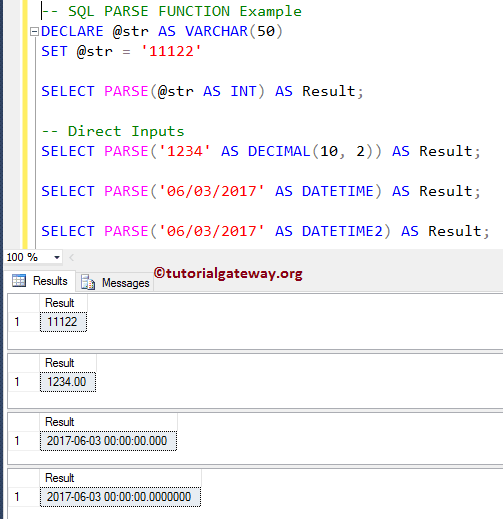
SQL PARSE Function

